

What to Say in A Thank You Card: Quick Message Guide
Thank you cards are a simple yet powerful way to show your appreciation. But what to say in a thank you card? Whether it’s for a gift, a kind gesture, or support, knowing what to say can feel tricky.
Don’t worry! In this guide, we’ll explore ideas and examples to help you write the perfect thank you card. By the end, you’ll know exactly what to say in a thank you card, no matter the occasion.
Why Write a Thank You Card?
Sending a thank you card is a heartfelt way to express gratitude. It strengthens relationships and shows thoughtfulness. But why is it so meaningful? Here are some reasons:
- It shows genuine appreciation.
- It’s more personal than a text or email.
- It makes the recipient feel valued.
- It helps build stronger connections.
A thank you card doesn’t have to be fancy. A few thoughtful words can go a long way.
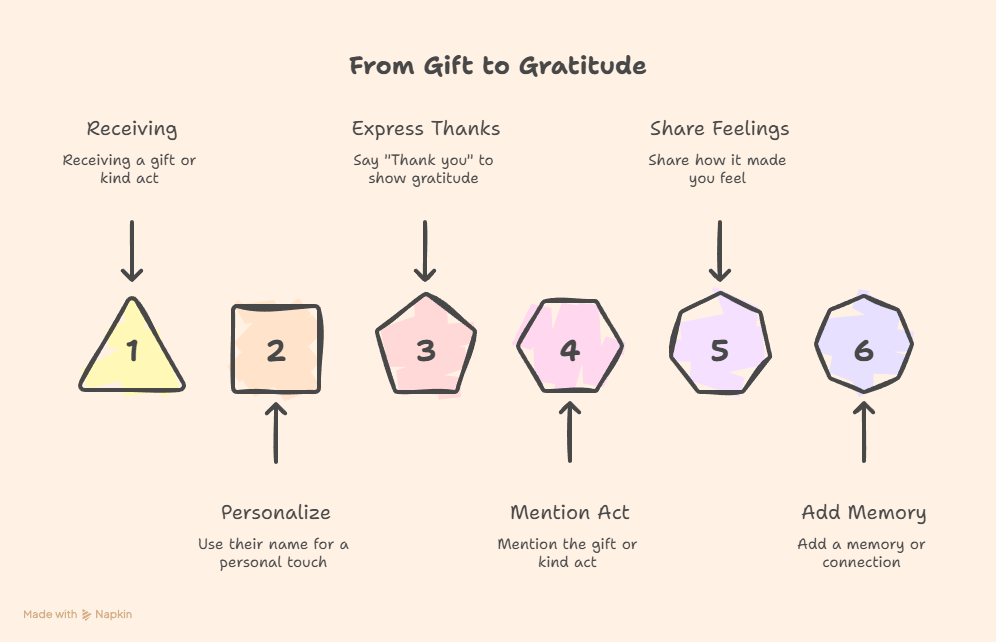
What to Say in a Thank You Card: Simple Steps
Writing a thank you card can seem daunting, but it’s actually simple when you break it down into a few clear steps. Here’s how you can craft a heartfelt message with ease:
1. Start with a Greeting
Begin your card with a warm and personal greeting. Using the recipient’s name adds a friendly and genuine touch. Avoid generic terms like “To Whom It May Concern” or skipping the greeting altogether. A personalized opening immediately shows the recipient that the message is just for them.
Example:
Dear Emily,
This simple yet thoughtful start helps set the tone for your thank you card.
2. Say Thank You
The next step is to clearly express your gratitude. Be specific about what you’re thankful for. Mention the gift, gesture, or act of kindness, so the recipient knows you truly noticed and appreciated their effort. Being specific makes your message more meaningful and avoids sounding like a generic response.
Example:
Thank you so much for the beautiful flowers you sent.
This line is straightforward and highlights exactly what you’re thankful for, making it more impactful.
3. Add a Personal Note
Go a step further by sharing how their gesture made you feel or how it impacted you. This shows genuine appreciation and helps the recipient understand the value of their kindness. A personal note doesn’t have to be long—it’s about making the card heartfelt and authentic.
Example:
They brightened my day and made me smile.
This simple addition transforms your thank you message into something memorable. It also strengthens the emotional connection between you and the recipient.
4. Close with Warmth
Finally, end your thank you card with a warm closing phrase. A thoughtful closing adds a sense of sincerity and leaves the recipient feeling appreciated. You can use phrases like “With gratitude,” “Sincerely,” or “Warm regards,” followed by your name.
Example:
With gratitude, Sarah.
This closing creates a lasting impression and wraps up your message with care.
So, Why This Formula Works
Each of these steps is designed to make the recipient feel valued while keeping your message simple and easy to write. By including specific details and personal touches, your thank you card will stand out and bring a smile to their face. Whether it’s for a friend, coworker, or family member, these steps ensure your gratitude shines through.
Thank You Card Messages for Different Scenarios
Knowing what to say in a thank you card can depend on the situation. Here are some elaborated examples for different scenarios to make your gratitude heartfelt and personal:
1. For a Gift
When someone takes the time to give you a gift, acknowledge their thoughtfulness. Mention the gift specifically and share how much it means to you.
Examples:
- Thank you for the lovely gift! The handmade scarf is not only beautiful but also so thoughtful. I will cherish it and think of you whenever I wear it.
- Your gift made my day. The book you chose is exactly what I’ve been wanting to read. Thank you so much for your thoughtfulness!
2. For Support or Help
If someone helped you through a challenging time, express how much their support meant to you. Acknowledge their kindness and how it impacted you.
Examples:
- Thank you for always being there for me. Your kindness and encouragement gave me the strength I needed. I can’t thank you enough.
- I couldn’t have done it without your help. Whether it was your advice or simply listening, you made a big difference in my life. Thank you!
3. For Attending an Event
When someone takes the time to attend your special occasion, let them know their presence matters.
Examples:
- It meant so much to have you at my birthday party. Thank you for making the effort to join the celebration. It wouldn’t have been the same without you!
- Thank you for making time to celebrate with us. Your presence made the day even more special, and we are so grateful.
4. For a Teacher or Mentor
Teachers and mentors shape us in ways we may not realize right away. A thank you card is a beautiful way to show appreciation for their guidance.
Examples:
- Thank you for your guidance and support. Your belief in me has pushed me to achieve things I never thought possible. You inspire me every day.
- I’ve learned so much from you. Your patience and wisdom have had such a positive impact on my life. Thank you for everything!
5. For a Friend
Friends are the family we choose. A thank you card is a great way to remind them of how much they mean to you.
Examples:
- Thank you for being such a wonderful friend. Your constant support and kindness mean more to me than words can say. I’m so lucky to have you in my life.
- Your friendship is a gift I treasure every day. Thank you for always being there, through good times and bad.
These examples make your thank you card personal and memorable, ensuring the recipient feels truly appreciated.
5 Tips to Make Your Thank You Card More Personal
Making a thank you card more personal can turn a simple gesture into something truly meaningful. Personalizing your message shows the recipient how much you care, making your gratitude unforgettable. Here are five tips to help you create a heartfelt thank-you card:
- Use their name: Starting with the recipient’s name immediately adds a personal touch. It shows that the card is meant just for them, making it feel more thoughtful.
- Mention specific details: Instead of a generic “Thank you,” include what you’re grateful for. Whether it’s a gift, help, or their presence at an event, highlighting specifics makes your message more meaningful.
- Share your feelings: Let the recipient know how their gesture made you feel. Whether it brought you joy, comfort, or support, sharing your emotions makes the card feel genuine and heartfelt.
- Add a memory or inside joke: If you share a special moment or funny memory with the recipient, include it. This creates a deeper emotional connection and makes the message truly unique.
- End with warmth: Close your card with a thoughtful phrase, like “With love” or “With gratitude,” followed by your name. A warm closing leaves a lasting impression.
These small details can turn your thank you card into something the recipient will treasure.
4 Tips for Writing a Thank You Card Quickly
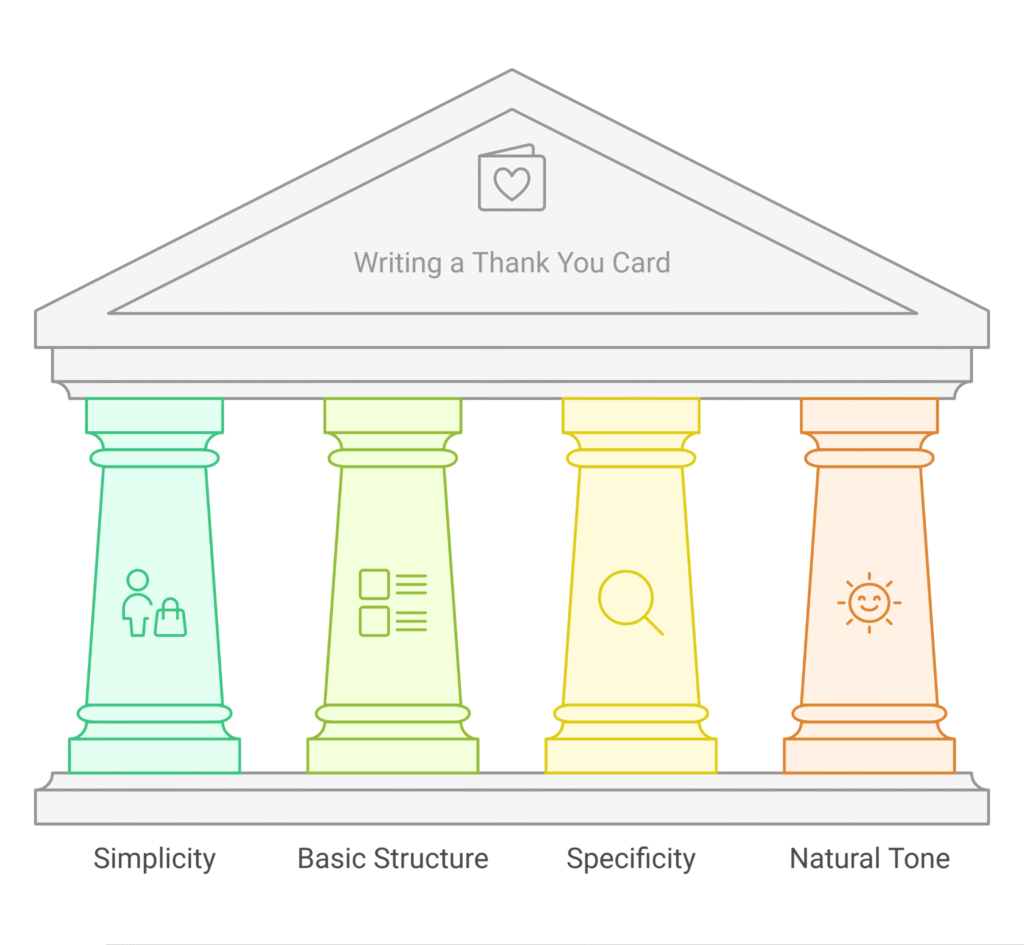
Writing a thank you card doesn’t have to take a lot of time. By focusing on key elements, you can create a heartfelt message quickly without losing its sincerity. Here are four tips to make the process easier:
- Keep it simple: Don’t overthink your message. A short, genuine thank you is enough. Focus on what you’re grateful for and express it in a few sentences.
- Use a basic structure: Follow a straightforward format: greet the recipient, say thank you, add a quick personal note, and close with a warm sign-off. Sticking to this structure saves time while keeping your message meaningful.
- Be specific but brief: Mention the gift, gesture, or event you’re thankful for without going into unnecessary detail. For example, “Thank you for the beautiful flowers; they brightened my day.”
- Write naturally: Use your everyday tone and avoid overcomplicating your words. Writing the way you speak ensures your message feels authentic and is quicker to compose.
With these tips, you can write a thoughtful thank you card in minutes, leaving your recipient feeling appreciated without needing to spend hours on it. Need more inspiration? You can also read our article on alternatives to saying no worries’.
FAQs: What to Say in A Thank You Card
What should I write in a short thank you card?
Start by thanking the person, mention the specific gift or gesture, and end with a warm closing like “I truly appreciate it” or “Thanks again.”
How long should a thank you card message be?
A thank you message can be 2-4 short sentences. The key is being sincere rather than writing something long.
When should I send a thank you card?
Ideally within one to two weeks after receiving the gift, help, or kind gesture. Sending it sooner shows appreciation.
Can I email a thank you instead of sending a card?
Yes, email works for quick thanks, but a handwritten card often feels more thoughtful and memorable.
End Note
Thank you cards are a timeless way to show gratitude and connect with others. Now that you know what to say in a thank you card, it’s time to grab a pen and start writing! A heartfelt message, no matter how simple, can make someone’s day. Peace out.