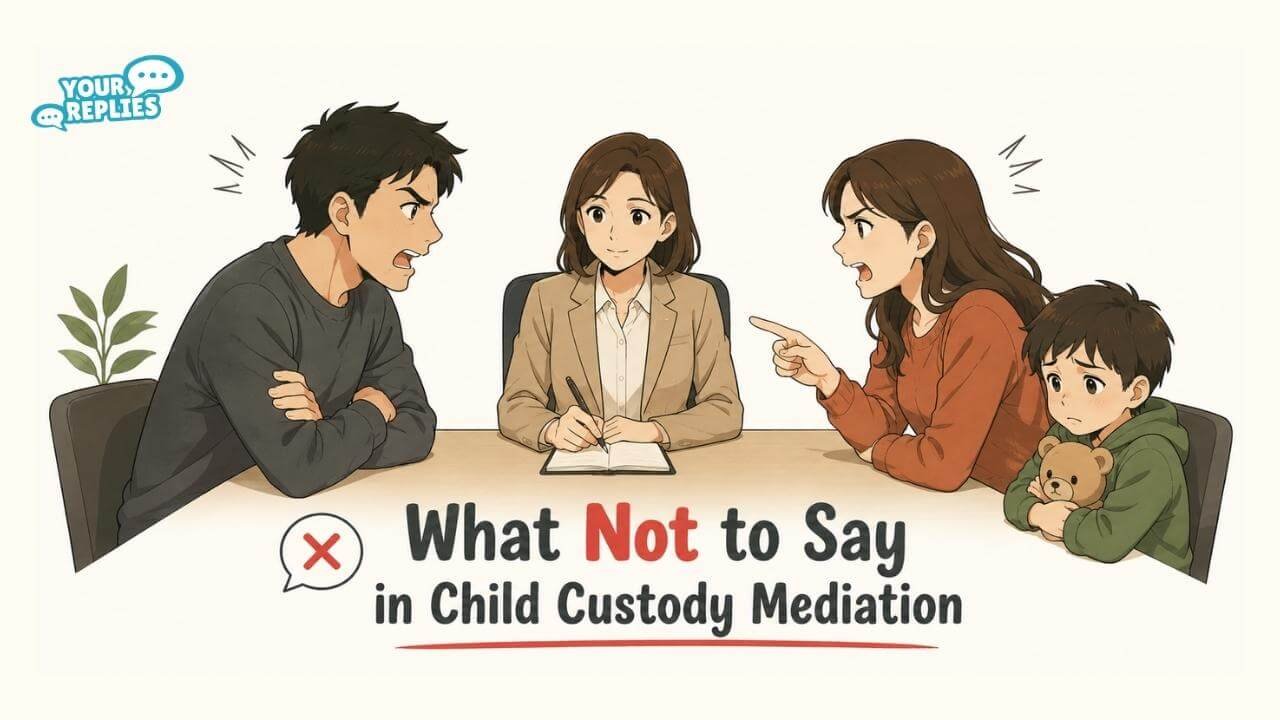
Child custody mediation is a chance to create a plan that works best for your child. But what you say can either help or hurt your case. Knowing what not to say in child custody mediation is just as important as knowing what to say.
Negative comments, rigid demands, or emotional outbursts can make the process harder. These mistakes can harm your credibility and reduce your chances of reaching an agreement.
To avoid these pitfalls, focus on respectful and calm communication. This blog will guide you through words to avoid and how to stay positive during mediation.
Disclaimer: This article is for general informational purposes only and is not legal advice. Laws vary by state and situation – please consult a licensed attorney or local legal aid service for guidance specific to your case.
Why Words Matter in Mediation
The words you use during child custody mediation can shape the outcome. Mediation is not just about what you want. It’s also about how you communicate. Here’s why your statements matter and how to make the most of them:
Words Create Impressions
What you say shapes how others see you. If you speak calmly and respectfully, you’ll appear cooperative and mature. This helps the mediator see you as someone who prioritizes the child’s needs. Negative or angry comments can make you look unreasonable or unfit as a parent.
Respect Helps Build Agreements
When you stay respectful, it becomes easier to reach agreements. Harsh words or insults can make the other parent defensive. This can lead to arguments instead of solutions. Focus on your child’s best interests and avoid personal attacks. Respectful communication keeps the process smoother.
Calm Words Show You’re Focused
Mediation can be emotional. But staying calm shows you can handle tough situations. Yelling or raising your voice can make things worse. It may also hurt your case. Use a steady tone and choose words that show you’re focused on solving problems.
What You Say Affects Decisions
Mediators and judges listen closely to what you say. If you sound cooperative and child-focused, it can work in your favor. Saying things like, “I’m willing to work together for my child’s happiness,” shows you’re open to solutions. Avoid saying, “I’ll never compromise.”
Listening Is Just as Important
Mediation isn’t only about talking. Listening to the other parent helps you respond better. If you interrupt or dismiss their words, it creates tension. When you listen, you can find areas where you agree. This shows you’re willing to work together.
Positive Language Builds Trust
Using positive language helps build trust. For example, instead of saying, “You always make things hard,” say, “Let’s find a way to make this easier for everyone.” Positive words show you care about finding solutions instead of creating conflict.
Things Not to Say in Child Custody Mediation
The words you use in child custody mediation matter a lot. Saying the wrong thing can hurt your case. Here are some things you should avoid saying:
Negative Comments About the Other Parent
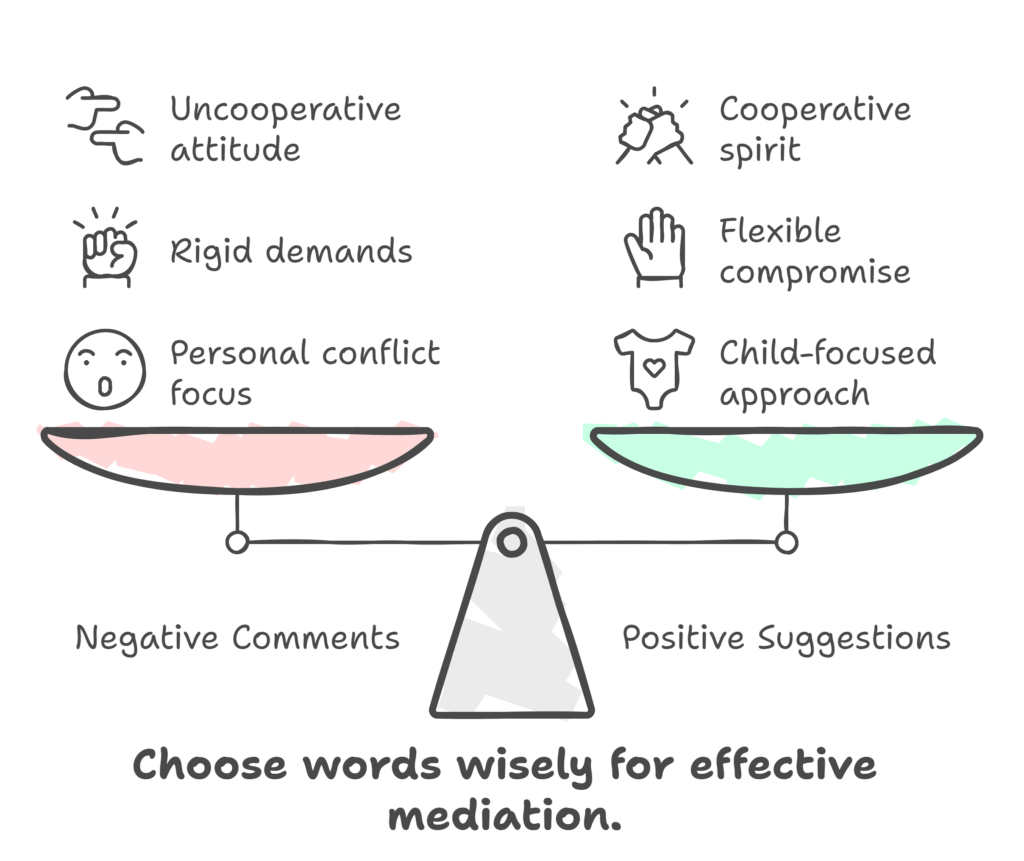
Badmouthing the other parent can make you look bad. It shows you are more focused on personal conflicts than your child’s well-being.
For example, if you say, “They’re a terrible parent who doesn’t care,” it can backfire. The mediator might think you are being unfair or uncooperative. Instead, focus on your child and suggest ways to work together.
Demands Without Compromise
Saying things like, “I won’t agree to anything unless I get full custody,” makes you seem rigid. Mediation is about finding middle ground.
If you’re unwilling to compromise, the process may fail. Instead, say, “I’d prefer full custody, but I’m open to discussing shared time if it benefits our child.” This shows you are flexible and child-focused.
Statements That Show You’re Uncooperative
Phrases like, “I don’t care what they want,” or, “This is a waste of time,” can make you seem difficult. Mediators want to see parents who can work together.
Show you’re willing to cooperate. Use phrases like, “I’m here to find the best solution for our child.” This creates a positive impression.
Overly Emotional or Angry Remarks
Losing your temper can hurt your credibility. Emotional outbursts may affect how your communication is perceived during mediation.
If you feel upset, take a deep breath and pause before speaking. Use calm words like, “I understand this is hard, but I want to focus on solutions.” Staying calm shows maturity.
Promises You Can’t Keep
Don’t agree to something unrealistic just to end the mediation. For example, saying, “I’ll handle all drop-offs and pick-ups,” when your schedule doesn’t allow it can cause problems later.
Be honest about what you can do. Say, “I can manage pick-ups on certain days, but I may need help with others.” This shows you are reliable and realistic.
Tips for Positive Communication
Positive communication is key in child custody mediation. It helps you find solutions and build trust. Here are some tips to make sure your communication stays effective and respectful:
Focus on the Child’s Best Interests
Always keep your child’s well-being as the main priority. Avoid statements like, “This is what I want.” Instead, say, “This is what I believe is best for our child.”
When you focus on your child’s needs, it shows you’re a caring and responsible parent. Mediators appreciate parents who prioritize their children over personal conflicts.
Use Neutral and Respectful Language
Avoid blaming or accusing the other parent. Words like “You always make bad decisions” can create conflict. Instead, use neutral statements like, “Let’s discuss what works best for both of us.”
Respectful language shows maturity and helps keep the conversation productive. It also makes it easier to find solutions.
Listen Actively
Listening is just as important as speaking. Pay attention to what the other parent says without interrupting. Show that you understand by nodding or repeating key points.
For example, you can say, “I understand you’re worried about school schedules. Let’s find a plan that works for everyone.” This helps build trust and cooperation.
Avoid Emotional Reactions
Stay calm, even if the discussion gets heated. Avoid yelling, crying, or making angry remarks. These reactions can hurt your case.
If you feel overwhelmed, take a deep breath or ask for a short break. Calm communication shows you can handle tough situations with maturity.
Be Open to Compromise
Flexibility is important in mediation. Instead of demanding everything your way, be willing to meet in the middle. For example, say, “I prefer weekends, but I’m open to adjusting if needed.”
This shows you’re cooperative and focused on finding a solution that benefits your child.
Extra Scenario: For example, instead of saying, ‘You never care about schedules,’ try saying, ‘Can we create a schedule that gives our child more consistency?
You can also check out what to say after surgery; it will give you some nice ideas for certain life events.
Even when life feels busy or emotionally heavy, stepping into gardening content or plant-focused events can be a simple way to reset your mind and breathe a little easier. If that kind of calm outdoor inspiration speaks to you, this guide to seasonal happenings at Fairchild Tropical Botanic Garden might be a nice detour, especially around their Spring Plant Sale in May, 2026.
FAQs: What Not to Say in Child Custody Mediation
Focusing on your child’s needs shows that you prioritize their well-being over personal issues. It helps mediators see you as a responsible parent. This approach also encourages productive discussions and creates a better parenting plan that benefits the child.
Neutral language avoids blaming or attacking the other parent. Instead of saying, “You always fail,” say, “Let’s find a solution that works.” Neutral language keeps conversations calm and respectful, helping both parties work together for the child’s benefit.
Active listening shows you respect the other parent’s perspective. It helps build trust and reduces misunderstandings. For example, repeating their concerns or offering solutions based on their input makes the discussion more cooperative and child-focused.
Take a deep breath or ask for a short break if you feel overwhelmed. Avoid yelling or making emotional remarks. Staying calm shows you can handle tough situations and helps maintain a positive atmosphere during mediation.
End Note
Understanding what not to say in child custody mediation helps you build a stronger case for your child. Avoid badmouthing, unrealistic promises, or overly emotional remarks. Instead, focus on respectful communication and workable solutions.
Successful custody mediation is rarely about winning arguments. It’s about showing that you can communicate calmly, support your child’s needs, and work toward practical solutions with the other parent.
Note: This article is for informational purposes only and should not be considered legal advice. Custody laws and mediation procedures vary by state and country. Consult a qualified family law attorney or mediator for advice about your situation.