

Thinking about quitting your job but unsure what to say? Resigning can feel stressful, especially if you’re worried about saying the wrong thing. A professional 2-week notice helps you leave on good terms.
Giving a clear and respectful notice isn’t just polite; it shows professionalism. It gives your employer time to adjust and helps protect your reputation for future opportunities. Knowing what to say can make this transition easier for everyone involved.
In this guide, we will cover what to say in a 2 week notice, including key phrases, common mistakes to avoid, and tips for leaving gracefully.
Why Is a 2-Week Notice Important?
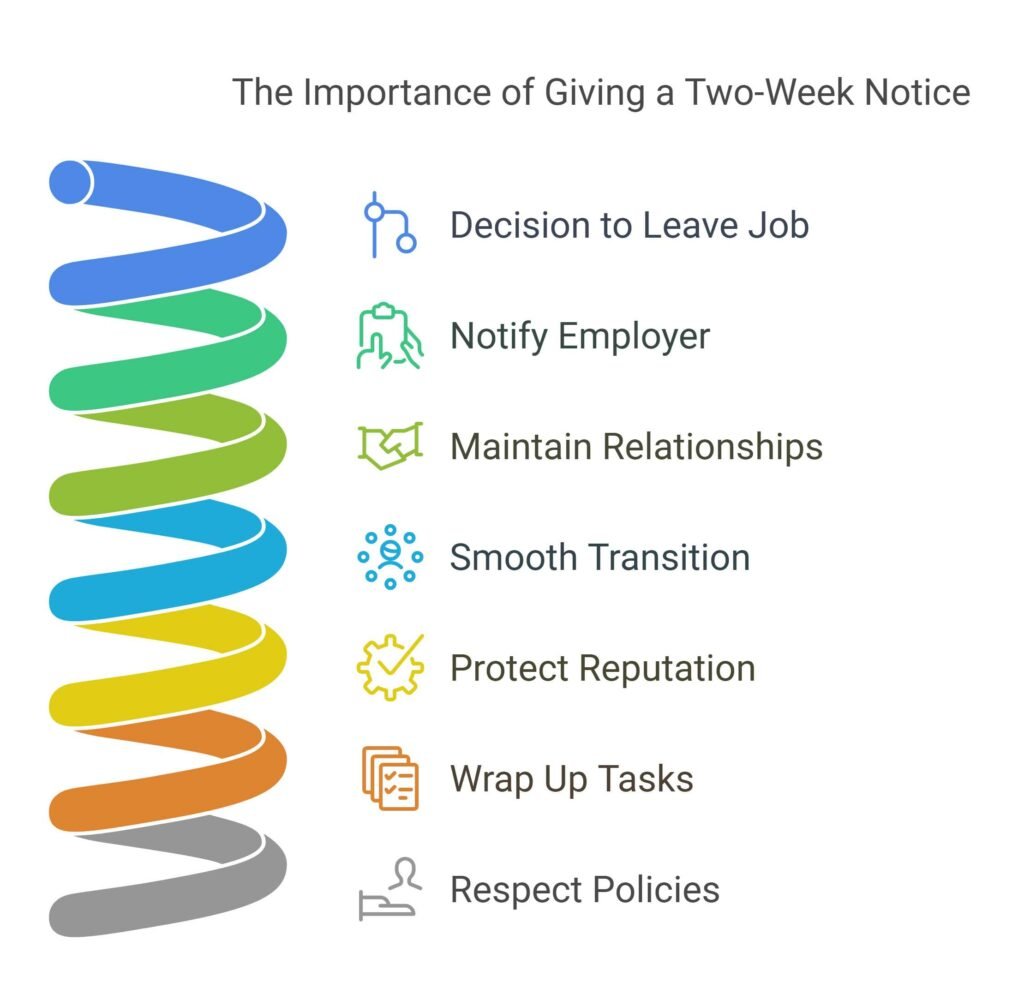
Giving a 2-week notice when leaving a job shows professionalism and respect. It’s not just a formality; it helps everyone involved in the process. Here’s why it matters:
- Maintains Good Relationships: Telling your employer in advance shows you care about their time. It helps you leave on good terms.
- Gives Time for a Smooth Transition: Your employer can use this time to find someone to replace you. It allows for better planning and handovers.
- Helps Protect Your Reputation: Leaving suddenly can make you look unprofessional. A proper notice ensures you stay in good standing for future references.
- Allows Time to Wrap Up Tasks: You can finish pending work or train your replacement. This makes it easier for your team to continue without problems.
- Shows Respect for Company Policies: Many companies expect a notice period. Following this rule shows you respect workplace norms.
By giving a 2-week notice, you leave a positive impression. It reflects well on you as a person and a professional. Always remember, how you leave a job can affect your future opportunities. Be thoughtful and respectful during this process.
What to Say in a 2 Week Notice: Effective Ideas
Writing a 2-week notice can feel stressful, but it doesn’t have to be complicated. The key is to stay polite and professional. A well-written notice helps you leave your job on good terms.
Here are some effective ways to express your message, along with examples for different situations.
Start with a Clear Statement
Begin your notice with a direct statement about your decision to leave. Be respectful and mention your last working day.
Example:
“Dear [Manager’s Name],
I am writing to inform you of my decision to resign from my position as [Job Title]. My last working day will be [specific date], two weeks from today.”
This shows clarity and respect for your employer’s time.
Express Gratitude
Show appreciation for the time you’ve spent at the company. This leaves a positive impression.
Example:
“I want to thank you for the opportunities I’ve had to learn and grow during my time here. I am grateful for your support and guidance throughout my role.”
Gratitude softens the message and highlights your professionalism.
Offer to Help with the Transition
Let your employer know you’re willing to assist in the transition period. This could include training your replacement or wrapping up important tasks.
Example:
“During the next two weeks, I am happy to help with training my replacement or completing any ongoing projects to ensure a smooth handover.”
Offering help shows that you care about the team and company.
Keep It Professional for Difficult Situations
If you’re leaving due to personal or workplace challenges, avoid sharing too much detail. Keep it professional and neutral.
Example:
“After careful thought, I have decided to step down from my position. My last working day will be [specific date]. Thank you for the experiences I’ve gained here.”
This approach keeps the focus on your decision, not the problem.
Be Honest for Career Growth Reasons
If you’re leaving for a new opportunity, briefly explain it without being negative about your current job.
Example:
“I have accepted a position that aligns with my long-term career goals. I am grateful for the experiences I’ve had here, which have prepared me for this next step.”
This shows you’re moving forward while respecting your current role.
Use Polite Language for Relocation Reasons
If you’re resigning due to relocation, make it clear in a respectful way.
Example:
“Due to personal reasons, I will be relocating and unable to continue in my role. I appreciate the support I’ve received here and will ensure a smooth transition.”
This keeps your tone positive while explaining your reason.
Stay Neutral in Sensitive Situations
If you’re leaving under difficult circumstances, keep the tone neutral. Avoid blaming or criticizing anyone.
Example:
“I have decided to resign from my position, with my last working day being [specific date]. Thank you for the opportunities and support during my time here.”
This helps you leave without creating unnecessary tension.
Final Tips for Writing a 2-Week Notice
- Be brief and to the point. Avoid unnecessary details.
- Use simple and polite language.
- Focus on showing gratitude and professionalism.
- Keep a positive tone, even if your reasons for leaving are negative.
- Avoid complaining about the job or your employer.
What Not to Say in a 2 Week Notice
When writing a 2-week notice, it’s important to stay respectful and professional. Saying the wrong things can damage your reputation or relationships. Here are some things you should avoid mentioning in your notice.
Don’t Complain About the Job
Avoid writing about your frustrations with the job, manager, or coworkers. Complaints can make you look unprofessional.
Example to Avoid:
“I can’t stay here anymore because the workload is too much, and the management doesn’t care.”
Instead, focus on leaving gracefully.
Don’t Mention Personal Conflicts
If you had issues with coworkers or managers, leave them out of your notice. Your resignation is not the time to settle scores.
Example to Avoid:
“I’m leaving because I don’t get along with my team.”
Stay polite and focus on your decision to move on.
Don’t Share Negative Opinions
Avoid criticizing the company or its policies. Being negative can harm your professional image.
Example to Avoid:
“This company doesn’t value its employees, and the policies are unfair.”
Keep your tone neutral and respectful.
Don’t Overshare Personal Reasons
You don’t need to share private details about your decision.
Example to Avoid:
“I’m leaving because of family problems and financial stress.”
Keep your message professional and simple.
By avoiding these mistakes, you’ll leave your job on good terms. A positive 2-week notice sets the stage for better future opportunities.
How to Deliver Your 2-Week Notice
Delivering your 2-week notice is just as important as writing it. Always tell your manager first. Schedule a face-to-face meeting if possible. This shows respect and professionalism. If meeting in person isn’t possible, a phone call works too.
After the conversation, hand over a written notice. Keep it polite and professional. Clearly mention your last working day. Avoid discussing your decision with coworkers before telling your manager.
Be calm and confident during the discussion. Thank your manager for the opportunity. Offering help with the transition shows that you care about leaving on good terms. Always stay respectful and positive.
FAQs: What to Say in a 2 Week Notice
Keep your notice polite and professional. Avoid mentioning negative experiences, even if they influenced your decision.
If you can’t deliver it in person, email is acceptable. Make sure it’s professional and sent directly to your manager.
Yes, thanking your employer shows professionalism and leaves a positive impression. A simple, sincere sentence is enough.
Yes, offering to help with the transition shows responsibility and leaves a good impression on your employer.
Check our previous blog on What to Say in a 50th Anniversary in your leisure.
End Note
Always stay professional and polite when deciding what to say in a 2 week notice. Be clear about your resignation, express gratitude, and offer to assist with the transition. Avoid complaints, conflicts, or negative remarks, as they can harm your reputation.
Keeping the tone respectful and positive helps you leave on good terms and maintain future opportunities. A well-crafted notice reflects your professionalism and ensures a smooth departure for both you and your employer.
Other Blogs: