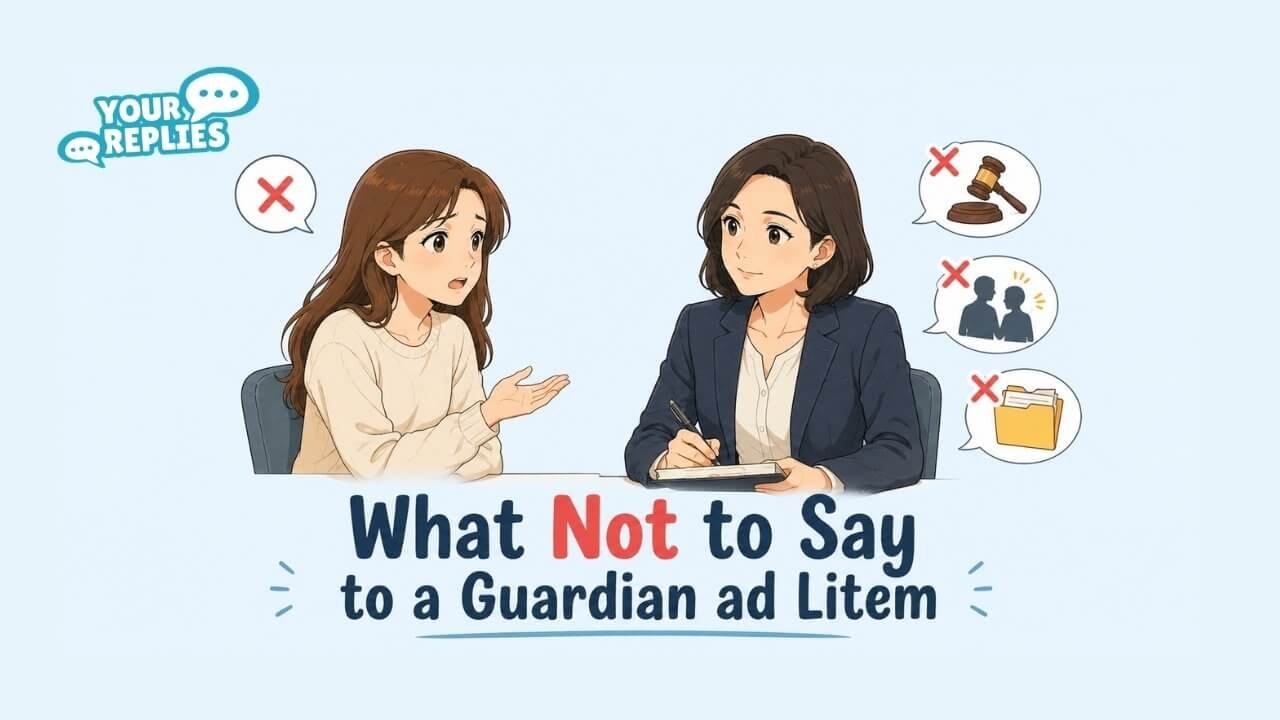
When going through a child custody case, you may meet with a Guardian ad Litem (GAL). The GAL’s role is to protect the child’s best interests, but what you say to them can influence their opinion. Knowing what not to say to a Guardian ad Litem is just as important as knowing what to say.
Unnecessary hostility, false claims, or personal feelings about their role can hurt your case. In this blog, we’ll explore key things to avoid saying during your conversation with the GAL to make sure your message is clear and focused.
Disclaimer: This article is for general informational purposes only and should not be considered legal advice. Guardian ad Litem procedures and custody laws vary by jurisdiction. Consult a qualified family law attorney for advice regarding your specific situation.
Avoid Being Hostile or Negative
When talking to a Guardian ad Litem (GAL), it’s important to stay calm and respectful. Accusatory or aggressive statements can hurt your case.
The GAL is Neutral
The GAL’s job is to look at the situation fairly. They need to see both sides of the story. If you make negative comments about the other parent, it might make the GAL question your attitude. They are not there to pick sides but to find what is best for the child.
Aggressive Statements Can Look Bad
Making angry or harsh statements about the other party might come across as rude or emotional. This can make it harder for the GAL to trust your point of view. Stay calm and focus on the facts. Being respectful shows you are reasonable and cooperative.
Negative Remarks Can Influence the GAL’s Opinion
When you speak negatively about the other parent, it might affect the GAL’s impression of you. If you focus too much on the other party’s faults, the GAL might think you are trying to control or manipulate the situation. Instead, share concerns with care, without attacking.
Keep the Focus on the Child
It’s easy to get upset in these situations, but remember that the GAL is there for the child’s best interest. Negative statements about the other parent can make it seem like you are not focused on the child’s well-being. Keep the conversation centered on how the child’s needs are being met.
Be Honest, Not Hostile
You can share your concerns without being aggressive. Use clear, honest words, but avoid blaming others. This will help the GAL understand the situation better and make fair decisions.
Staying calm, respectful, and focused on the child’s needs will help you build a stronger case.
What Not to Say to a Guardian Ad Litem?
When speaking with a Guardian ad Litem (GAL), it’s important to stay calm and respectful. Hostile or negative statements can hurt your case. Here’s why:
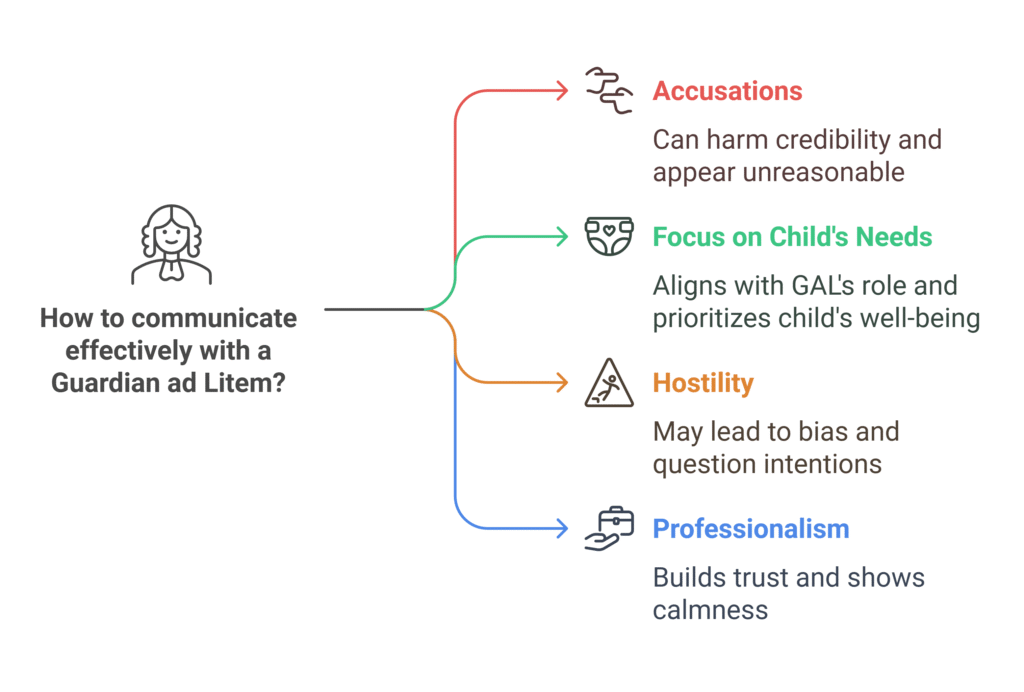
Accusations Can Hurt Your Credibility
- If you accuse the other parent of things without proof, it may look like you’re being unreasonable.
- The GAL will notice if your words are based on anger rather than facts.
Focus on the Child’s Best Interests
- The GAL’s job is to focus on what’s best for the child, not to take sides.
- If you spend too much time blaming the other parent, it could distract from the child’s needs.
Hostility Can Lead to Bias
- If you are too aggressive or emotional, the GAL might think you’re not able to put the child first.
- The GAL needs to remain neutral. If they feel that you are too negative, they may question your intentions.
Keep the Conversation Professional
- Use respectful language. Avoid making personal attacks.
- You want the GAL to see you as someone who can communicate calmly and thoughtfully.
Focus on Facts, Not Feelings
- Stick to the facts about the child’s well-being. If you feel frustrated, it’s better to express it calmly.
- Sharing your concerns is okay, but avoid letting emotions take over your words.
The GAL Will Notice Your Behavior
- Your attitude toward the other parent and the GAL can leave a lasting impression.
- If you stay calm and focus on the child’s needs, the GAL will see that you are responsible and trustworthy.
Avoid Discussing Your Personal Feelings About the GAL’s Role
When talking to a Guardian ad Litem (GAL), avoid making personal comments about their role. It’s important to remember that the GAL is there to help, not to take sides. Here’s why discussing your feelings about their role can hurt your case:
Comments Like “I Don’t Think You Should Be Involved” Can Hurt
- Telling the GAL that they shouldn’t be involved can come off as disrespectful.
- This can make you seem difficult to work with and unwilling to cooperate.
- The GAL’s role is to help, not to create problems for you.
The GAL Is There to Help the Child, Not to Take Sides
- The GAL’s job is to focus on the child’s needs, not to favor one parent over the other.
- If you suggest that the GAL shouldn’t be involved, you risk looking like you don’t understand their purpose.
- The GAL is trained to make decisions based on what’s best for the child, not based on personal feelings.
Claiming “I’m the Perfect Parent” Can Backfire
- Saying things like “I’m the perfect parent” or “I can provide the best environment” can hurt your case.
- It can make you look arrogant and unwilling to see any areas where you might improve.
- The GAL is looking for a realistic understanding of your parenting, not perfection.
Be Honest About Your Parenting Abilities
- Instead of claiming perfection, focus on what you can offer to your child.
- Talk about your strengths as a parent, but also mention areas where you’re working to improve.
- The GAL will appreciate your honesty and effort to grow as a parent.
Realistic Statements Are More Effective
- Speak honestly about your parenting abilities. Overstating them won’t help.
- Share examples of how you care for your child and meet their needs.
- The GAL will value realistic, fact-based statements more than exaggerated ones.
The GAL Will Take Notice of Your Attitude
- The way you speak about the GAL and your parenting can influence their opinion.
- If you seem open, cooperative, and focused on the child’s needs, it will work in your favor.
- Avoid complaining or being defensive about the GAL’s involvement.
FAQs: What Not to Say to a Guardian ad Litem
It’s important to respect the GAL’s role. Telling them not to be involved can make you appear disrespectful and unwilling to cooperate. The GAL is there to assess the child’s best interests and should not be seen as a problem in the case.
Yes. Claiming perfection can make you seem unrealistic or arrogant. The GAL is looking for honest and realistic views about your parenting. It’s more effective to highlight your strengths and areas where you are working to improve for your child’s sake.
The GAL’s role is to represent the child’s best interests. They provide an objective, neutral perspective, focusing on what is best for the child, not taking sides. The GAL gathers information to help the court make an informed decision.
Focusing on facts helps build trust with the GAL. Emotional statements can appear biased and may distract from the child’s well-being. The GAL needs clear, realistic information to assess your parenting abilities objectively and fairly.
End Note
If you can comprehend what not to say to a Guardian ad Litem can greatly impact your case. Avoid hostility, exaggerations, and personal opinions about the GAL’s role. Instead, stay calm, honest, and focused on your child’s needs.
By being realistic and respectful, you can make a positive impression and help the GAL assess the situation fairly. Keep communication clear and fact-based to show you’re a responsible and caring parent.