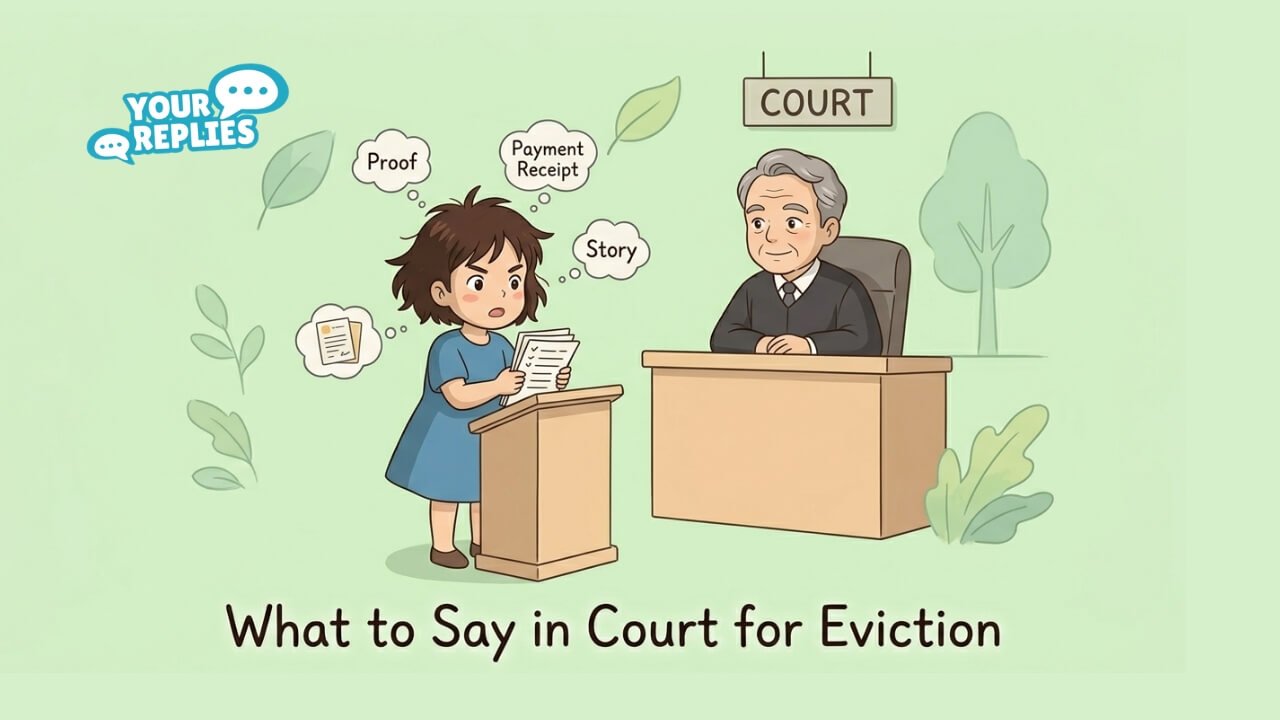
Facing eviction can be one of the most stressful experiences in life. Do you know what to say in Court for eviction? How you present your case could determine whether you stay in your home or not. Preparation is key, and knowing exactly what to say in court can help you navigate this difficult process.
This guide is for tenants facing eviction, as well as landlords pursuing eviction cases. Whether you’re trying to keep your home or resolve a dispute, understanding what to say is fundamental.
By being prepared and speaking clearly, you can improve your chances of a fair outcome in court.
Understand the Eviction Process
Eviction is the legal process of removing someone from a rental property. It happens when a landlord wants to end a tenant’s lease or agreement. There are certain steps that must be followed for eviction to be legal.
Step 1: Notice to the Tenant
The landlord must first give the tenant a notice. This notice tells the tenant they need to leave the property. The landlord must give enough time, usually between 3 to 30 days, depending on the reason for eviction.
Step 2: Filing for Eviction
If the tenant does not leave after the notice, the landlord can file for eviction in court. This is the first official step in the legal process. The landlord must show that the tenant broke the rules of the lease or didn’t pay rent.
‘Step 3: Court Hearing
The court will schedule a hearing. Both the landlord and tenant can present their sides. The judge will decide if the eviction is justified. The tenant may explain their side and ask for more time if needed.
Step 4: Eviction Order
If the court rules in favor of the landlord, they will issue an eviction order. The tenant must leave the property by a set date. If they do not, law enforcement may step in to remove them.
The court hearings play a big role in making sure both sides have a chance to explain their situation. It helps resolve any disputes fairly.
Also, check our blog on what to write in a boss day card; it will surely help you in life.
Prepare Before Court for Eviction
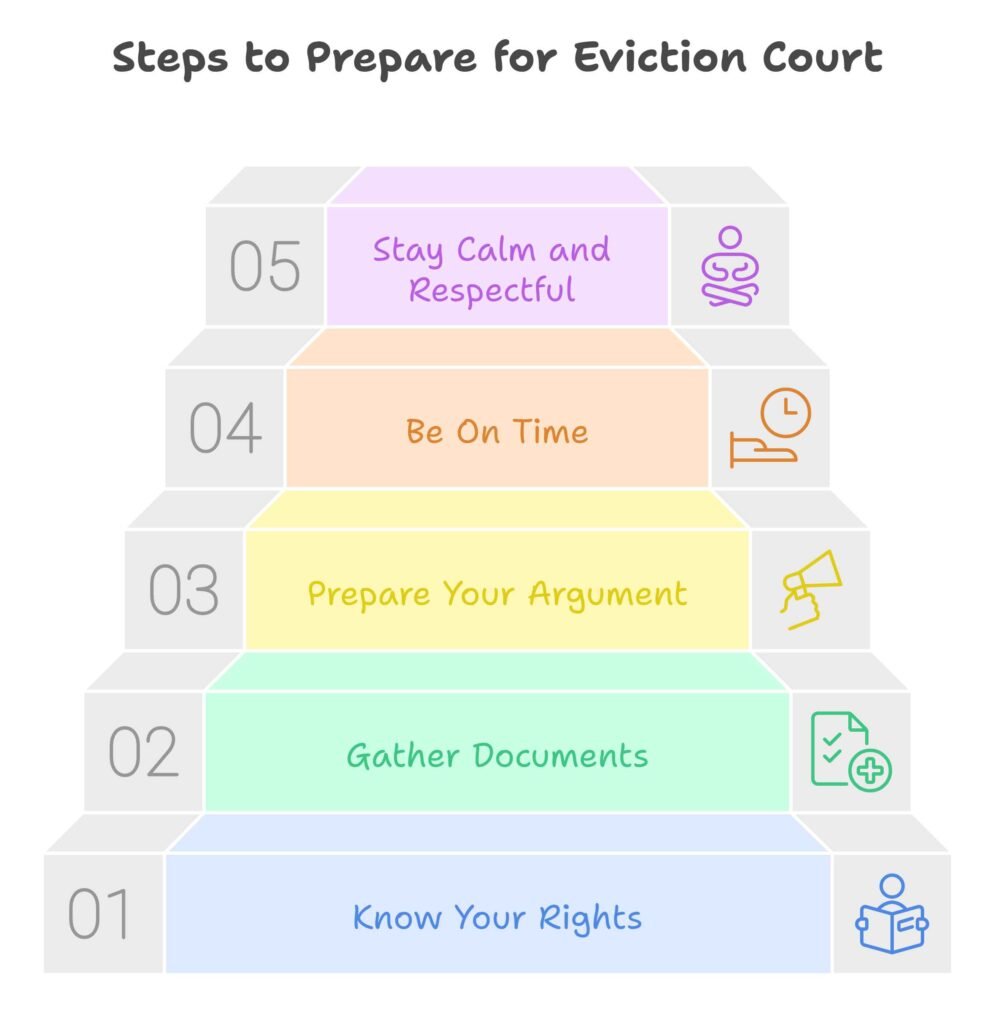
Preparing for court is important to make sure your side is heard. If you are facing eviction, you will need to be ready to explain your situation clearly. Here are some steps to help you prepare for court:
- Know Your Rights: Understand your rights as a tenant. Every place has different rules. Make sure you know what the law says about evictions in your area.
- Gather Documents: Collect all documents related to your case. This includes your lease agreement, proof of rent payments, and any letters from your landlord. These papers will help you show your side of the story.
- Prepare Your Argument: Think about what you want to say in court. Be clear and honest. Focus on facts, and avoid getting emotional. If there were any mistakes or misunderstandings, explain them.
- Be On Time: Arrive early for your court hearing. Being on time shows respect for the process. It also gives you a chance to settle in before the case starts.
- Stay Calm and Respectful: During the hearing, stay calm. Listen to what the judge and landlord say. Respect everyone in the courtroom, even if you disagree.
Being well-prepared can help you present your case clearly and increase your chances of a fair outcome.
What to Say in Court for Eviction
Going to court for eviction can be stressful. It’s important to stay calm and know what to say. You will have a chance to explain your side of the story.
Knowing what to say will help you present your case clearly. Here are some tips on what to say in court for eviction.
Start by Introducing Yourself
When it’s your turn, start by saying your name. You can say something like:
“Good morning, Your Honor. My name is [Your Name], and I am the tenant in this case.”
This helps the judge know who you are. It is important to be polite and respectful.
Explain Why You Are in Court
Tell the judge why you are there. This is where you explain the situation. For example:
“I am here today because my landlord wants to evict me. However, I believe I should not be evicted because I have been paying my rent on time.”
If the issue is not paying rent, explain your situation. You might say:
“I did not pay rent because I lost my job last month. I am looking for a new job and will pay as soon as I can.”
Present Your Evidence
You should bring documents that support your case. These could include your lease, rent receipts, or any letters between you and your landlord. For example:
“Your Honor, I have proof that I paid my rent last month. Here are the receipts showing I made the payments on time.”
If you have any communication with your landlord, like emails or text messages, show them to the judge. This helps show your side clearly.
Stay Honest About Your Situation
It’s important to be honest with the judge. If you made a mistake, admit it. If you didn’t pay rent on time, say why. For example:
“I am behind on rent because I had an unexpected medical emergency. I know I should have paid on time, but I had no choice.”
Being honest shows the judge that you are responsible and serious about fixing the issue.
Ask for More Time If Needed
If you need more time to pay or fix something, ask for it. Be respectful and explain why you need extra time. For example:
“Your Honor, I am asking for more time to pay my rent. I am expecting a paycheck in two weeks and will pay the full amount then.”
Sometimes, the judge may agree to give you extra time if you can show that you are working on the issue.
Be Calm and Respectful to the Judge and Landlord
Even if you disagree with the landlord, stay calm and respectful. Don’t interrupt when the landlord is speaking. The judge will listen to both sides. You can say:
“I understand what the landlord is saying, but I believe there is a misunderstanding. Here is why I think that.”
Being respectful shows you are serious and responsible. It also helps the judge focus on your case.
End by Asking for a Fair Decision
After you have explained your side, ask the judge to make a fair decision. For example:
“Your Honor, I respectfully ask you to consider giving me more time to pay the rent or come to a solution that works for both sides.”
You might also say:
“I am doing everything I can to fix this problem. Please allow me the chance to keep my home.”
Example Scenarios
Scenario 1: Late Rent Payment
If you are behind on rent but have a good reason, explain it. For example:
“I am a single parent, and my child was sick last month. I could not work as much and fell behind on rent. So, I will be able to pay next week.”
The judge might give you extra time if you explain clearly and show your efforts.
Scenario 2: Damaged Property
If the landlord says you damaged the property, explain your side. For example:
“The leak in the bathroom was not caused by me. I told the landlord about it, but they did not fix it in time. I can show you the messages.”
If you have proof, like photos or text messages, show them to the judge. This can help the judge see your point of view.
Scenario 3: Rent Paid but Landlord Claims Otherwise
If you paid the rent but the landlord says you did not, you can say:
“I have my receipts showing that I paid my rent. Here are the documents proving the payments were made on time.”
Present your receipts or bank statements to support your claim.
In court, it’s important to stay calm and explain your side clearly. Be honest, provide evidence, and ask for help if you need it.
The judge will make a fair decision based on what you say and the evidence you provide. By preparing and being respectful, you can increase your chances of a good outcome.
Are you interested in gardening? Read gardening blogs here:
What Not to Say in Court for Eviction
Going to court for eviction can be stressful. It’s important to know what not to say. Saying the wrong things can hurt your case. Here are some things to avoid saying in court.
It’s Not My Fault
Avoid blaming others without explaining why. If you say, “It’s not my fault,” the judge might think you are not taking responsibility. Instead, explain your situation. For example, “I had an emergency that caused me to miss the rent payment, but I am working on fixing it.” This shows you are willing to take responsibility.
I Didn’t Know the Rules
Don’t say you didn’t know the rules. Saying something like, “I didn’t know I had to pay on time” might make it look like you don’t care about the rules. Instead, show that you are learning and improving. You can say, “I understand now that I need to pay rent on time, and I plan to follow the rules from now on.”
I Have Other Problems Right Now
Don’t bring up personal problems that are not related to the case. Saying something like, “I’m dealing with a family issue” doesn’t help your case. Focus on the reason for the eviction. If you are behind on rent, explain that clearly. The judge is there to hear about the eviction, not your personal life.
I Can’t Pay, So I Shouldn’t Be Evicted
Avoid saying you can’t pay rent and expect the judge to let you stay. For example, “I don’t have the money, so I should not be evicted.” This doesn’t show you are working to solve the problem.
Instead, explain how you plan to pay or ask for more time. Say, “I need more time to pay because of my current situation. I will pay the rent in two weeks.”
I Don’t Like the Landlord
Avoid criticizing or complaining about the landlord in court. For example, “I don’t like my landlord” won’t help your case. Stick to the facts and focus on your situation. Personal feelings don’t matter in a court case. Always stay respectful and professional.
By avoiding these statements, you will help the judge see that you are taking the situation seriously. Focus on the facts, stay respectful, and show you are trying to fix the problem.
FAQs – What to Say in Court for Eviction
No, stay calm and respectful. Don’t argue with the landlord. Let the judge hear both sides and make a decision. Focus on presenting your facts clearly.
Answer honestly and clearly. If you don’t know something, say so. Don’t guess or make up answers. Stay calm and respectful while speaking.
Bring all documents related to your case. This includes your lease, rent receipts, emails, text messages with the landlord, and any other proof of payments or agreements.
End Note
When facing eviction, it’s important to stay calm and prepared. Know what to say in court for eviction to ensure your side is heard. Be honest, provide clear explanations, and present relevant evidence.
Show respect to the judge and landlord, and ask for more time if needed. Avoid making excuses or bringing up unrelated issues. By following these steps, you can increase your chances of a fair decision and work toward resolving the situation effectively.
Disclaimer: This article is for general informational purposes only and is not legal advice. Laws vary by state and situation – please consult a licensed attorney or local legal aid service for guidance specific to your case.