

Have you ever felt that “no worries” doesn’t quite fit? It can feel too casual in some settings or fail to convey enough empathy. So, what to say instead of “no worries”? This blog explores thoughtful alternatives that work in different scenarios.
Why “No Worries” Isn’t Always the Best Choice
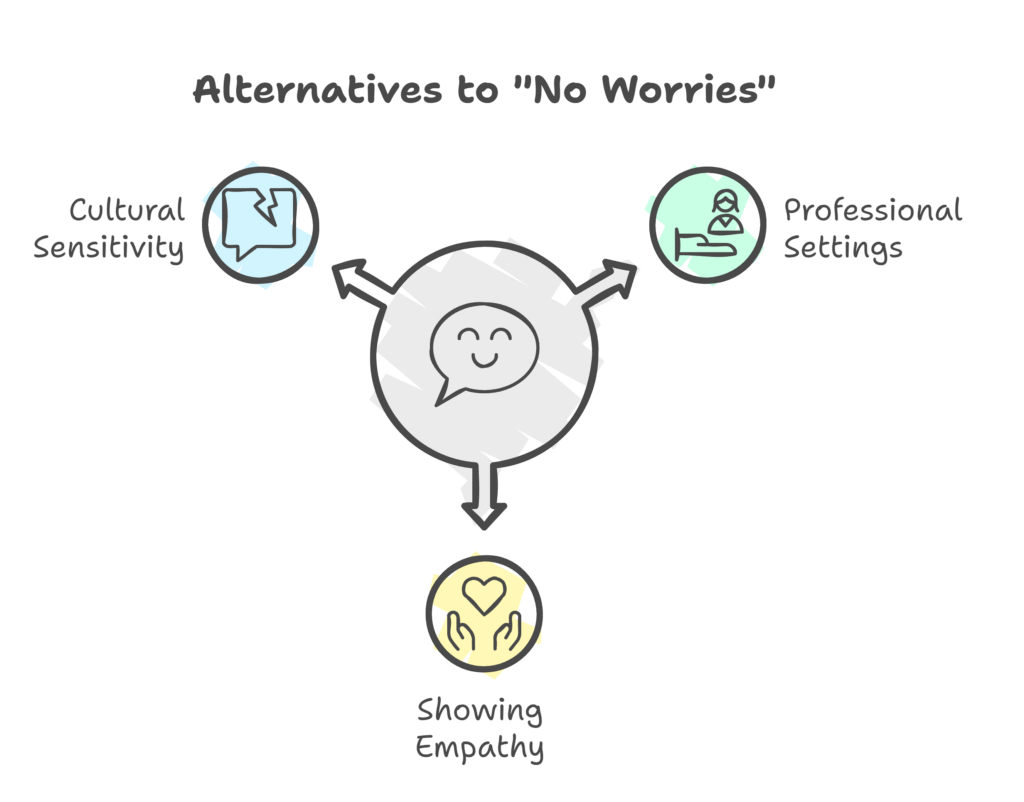
Saying “no worries” is common, but it may not always be appropriate. Here’s why you might reconsider:
1. It’s Too Casual
In professional settings, “no worries” can feel overly relaxed. If you’re talking to a boss, client, or colleague, you might want to use a more formal phrase to convey respect.
2. It Lacks Empathy
When someone apologizes or expresses concern, “no worries” might seem dismissive. You might intend to be reassuring, but it doesn’t always show understanding.
3. Cultural Differences
Not everyone is familiar with the phrase “no worries.” In some cultures, it may even sound unrelatable. A more universal phrase can avoid confusion.
By choosing alternatives, you can adjust your tone and create better connections.
What to Say Instead of No Worries
Now, let’s explore specific alternatives to “no worries.” These phrases can work across different situations, from casual conversations to professional interactions.
Casual Conversations
In relaxed settings, like chatting with friends or family, use:
- “No problem at all.”
This phrase is friendly and casual. It lets the other person know it’s not an issue.
- “It’s all good.”
Perfect for informal chats, this phrase keeps things light and breezy.
- “Don’t mention it.”
A polite and timeless response that works well in casual situations.
- “Anytime!”
It’s short and cheerful, signaling that you’re happy to help.
Professional Settings
In a work environment, professionalism is key. Consider these:
- “You’re welcome.”
Simple, respectful, and widely understood.
- “Happy to help.”
This phrase shows enthusiasm and a willingness to assist.
- “My pleasure.”
Adds a touch of warmth while staying professional.
- “It’s no trouble at all.”
Great for reassuring a colleague or client.
Empathy-Based Responses
When someone is apologizing or feeling bad, empathy matters:
- “I completely understand.”
This phrase shows patience and acknowledgment.
- “It’s absolutely fine.”
Softens the tone and assures the other person.
- “Don’t worry about it.”
Keeps the conversation kind and supportive.
Why Choose Alternatives to “No Worries”?
The words you use shape how others perceive you. According to Peter F. Drucker, Renowned Management Consultant and Author,
“The most important thing in communication is hearing what isn’t said.”
Here’s why switching up your language matters:
- Improved Communication: Alternatives like “you’re welcome” or “I understand” clearly convey your intentions.
- Stronger Connections: Saying “happy to help” or “my pleasure” makes you appear approachable and considerate.
- Context-Appropriate Responses: In formal or emotional settings, thoughtful phrases resonate better than casual ones.
Choosing the right words can make a huge difference in how you build relationships, whether personal or professional.
Different Scenarios and Alternatives
Let’s break down more specific situations where “no worries” might not be ideal.
1. Helping a Friend or Family Member
When you’re lending a hand to someone close, go for:
- “Of course!”
- “Glad to help.”
- “It’s nothing.”
These phrases keep the tone light and show your care.
2. In Professional Emails
Writing to a colleague, manager, or client? Use these formal alternatives:
- “Thank you for bringing this to my attention.”
- “I’m happy to assist.”
- “Please let me know if you need anything else.”
Such phrases project professionalism and a willingness to collaborate.
3. Responding to an Apology
When someone apologizes, reassure them with:
- “No need to apologize.”
- “I understand; it happens.”
- “Not a problem at all.”
These responses show understanding and keep the tone friendly.
4. Customer Service Interactions
If you’re in a service role, be extra polite with:
- “Thank you for reaching out.”
- “We appreciate your patience.”
- “I’m here to help with anything you need.”
Professional yet approachable, these phrases create a positive impression.
5. When Receiving Thanks
If someone thanks you, instead of “no worries,” say:
- “You’re very welcome.”
- “It’s my pleasure.”
- “Always happy to help.”
These phrases sound genuine and express gratitude.
Quick Guide to Alternatives
Here’s a simple list of options for when to use specific alternatives:
- Casual Conversations: “It’s all good,” “No problem.”
- Work Settings: “You’re welcome,” “Happy to assist.”
- Apologies: “No need to apologize,” “I understand.”
- Customer Service: “Thank you for contacting us,” “Glad to assist.”
By keeping these in mind, you can easily adapt your tone to fit the situation.
FAQs
- Why should I stop saying “no worries”?
It can sound too casual or dismissive in formal or emotional conversations.
- What’s a good alternative for professional emails?
“Happy to assist” or “Please let me know if you need anything else” works well.
- Can I use “no worries” casually?
Yes, it’s fine in relaxed settings, like with friends or family.
- What’s the most empathetic response to an apology?
“I completely understand” or “It’s absolutely fine” shows care and understanding.
End Note
Choosing what to say instead of “no worries” depends on the situation. Thoughtful alternatives help you sound more professional, empathetic, or approachable. Use the phrases that fit best, and you’ll leave a positive impression every time.